Paying off debt: snowball or avalanche?
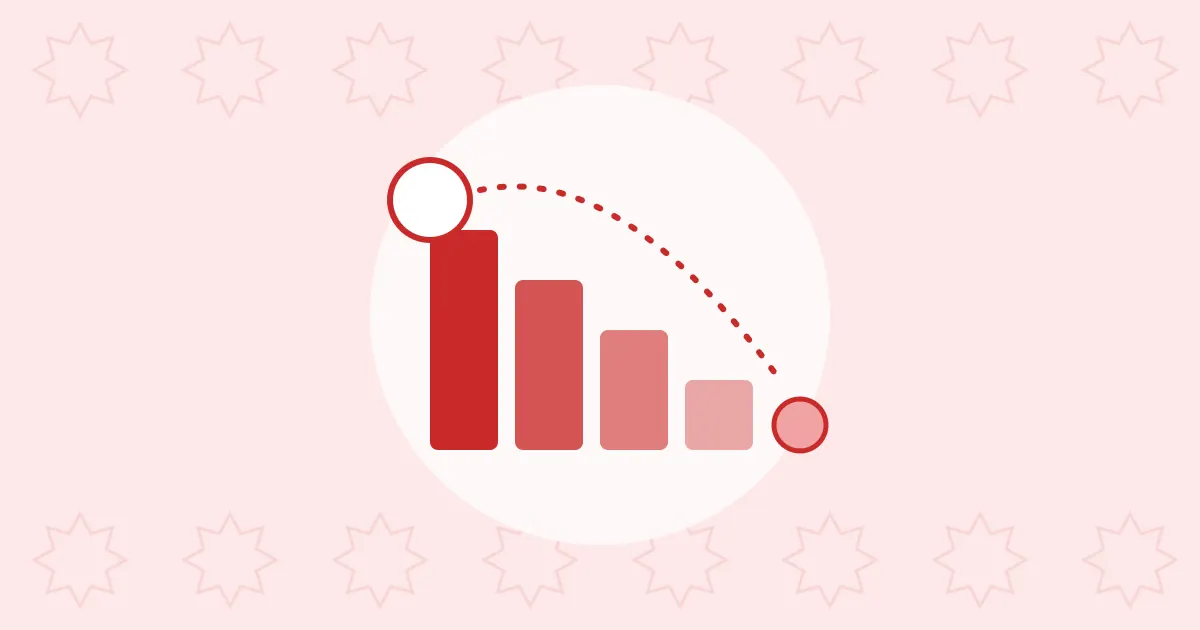
When you have several debts — a credit card, a car loan, a store credit — the question is not only how much to repay, but in what order. Two methods dominate: the snowball and the avalanche. Both share the same base and differ only in the order of priority.
The common base
- Keep paying the minimum on every debt, every month, without exception.
- Find an extra amount to put towards debt each month — even a small one.
- Put the whole extra amount on one debt, the priority debt.
- When it is repaid, add its minimum payment to the extra amount, and attack the next debt. The amount you repay each month never decreases: it rolls over from one debt to the next.
The snowball: smallest balance first
You rank debts from the smallest balance to the largest, regardless of interest rate. The advantage is psychological: the first debt disappears quickly, and that success motivates you to continue.
The avalanche: highest rate first
You rank debts from the highest interest rate to the lowest. Mathematically, it is the method that costs the least interest, because the most expensive debt is eliminated first.
Put this into practice with your own figures.
Open the plannerA comparison with figures
Consider three debts and a total repayment budget of $400 a month (minimums of $250 plus $150 extra):
| Debt | Balance | Annual rate | Minimum |
|---|---|---|---|
| Credit card | $1,200 | 22% | $40 |
| Car loan | $6,000 | 7% | $180 |
| Store credit | $600 | 15% | $30 |
With our calculation (interest calculated monthly):
- Snowball (store credit, then card, then car): the store credit disappears in month 4, the card in month 9, everything is repaid after 22 months. Total interest: about $622.
- Avalanche (card, then store credit, then car): the card disappears in month 7, the store credit in month 9, everything is repaid after 22 months. Total interest: about $602.
In this example, the avalanche saves about $20 — but the snowball gives a first victory three months earlier. The gap grows when debts have very different rates and large balances.
Which one to choose?
- Choose the avalanche if you are motivated by numbers and your expensive debts are large.
- Choose the snowball if you have tried before and given up, or if you have many small debts.
- A hybrid is fine: start with a very small debt for a quick win, then switch to the avalanche.
The most important factor is not the method, but the extra amount and the regularity. Going from $150 to $250 extra per month shortens repayment far more than the choice between snowball and avalanche.
Before you start
- Build a small emergency fund first, otherwise the next unexpected expense will go back on the card.
- Stop adding new debt: put cards aside if necessary.
- Negotiate: a lower rate, a consolidation loan at a better rate, or a balance transfer can help — if the fees are clear and you do not run up the card again.
- Check prepayment rules: some loans charge fees for early repayment.
Frequently asked questions on this topic
Should I stop saving while I repay debts?
Not completely. Keep a small emergency fund and keep saving for annual bills, otherwise the next unexpected expense will create new debt. Beyond that, putting most of your free money toward expensive debts is usually the best choice.
Does consolidating my debts help?
It can, if the new loan has a lower rate and clear fees, and if you stop using the old cards. Consolidation simplifies payments, but it does not reduce debt by itself: the repayment effort remains the same.
What if I cannot pay the minimums?
Contact your lenders before you miss a payment. Many offer temporary arrangements. Free debt advice services, where they exist in your country, can also help you build a realistic plan.
Good to know — Write down the date each debt is repaid. Seeing the list of cleared debts grow is a strong motivation for the rest of the plan.
In the planner
Enter the minimum payments as a need in step 3 (“Loan repayments”). Add a separate line for the extra repayment and classify it as savings: it reduces your debt and improves your net worth. The alerts will tell you if your housing and loan repayments exceed 36% of your income.